


It’s 8.37am and I’m digging myself out of a slew of acronyms that have pilled unchecked into my inbox overnight. Here they are, in stark nudity, clumsily barging their way into sentences like a drunk uncle at a wedding. Smug capital letters, expecting immediate comprehension.
I read the email three times. I’m still not clear what is expected from me. An hour later, I’m still gripping my phone, resisting the urge to type feverishly into the thread and ask why no one involved can say what they ACTUALLY mean like every human being who has ever existed on Earth. Ever.
I, like many others, do not have time for such linguistic forensics. And at the risk of sounding like an angry man shouting at a fence, let me explain why.
I’ve long struggled with the inherent dichotomy between creativity—you know, real unbounded ‘philosophically unmoored’ creativity—and workplaces whose culture is ethically and structurally built around business. Not just business as a function, but business as a belief system. A worldview. Or to be blunt, a personality replacement.
And with that comes language. Always language. Beautiful, chewy, kaleidoscopic language.
Workplace jargon. The stuff that cascades endlessly through LinkedIn feeds like a corporate water feature, offers almost nothing in the way of personality, presence, or feeling. It is a club for those who know, and deeply exclusionary for those who don’t. A linguistic secret handshake, clad in the grey-suit of homogenisation.
I’ve always found it hard to reconcile that with how I am. Because I believe words actually mean something. Nuance matters. Rhythm matters. Every decision inside a sentence carries weight. Jargon flattens all of that. It irons language into something smooth, dead, and reductively inoffensive—something no more memorable than an airport carpet, and just as easily well-trodden.
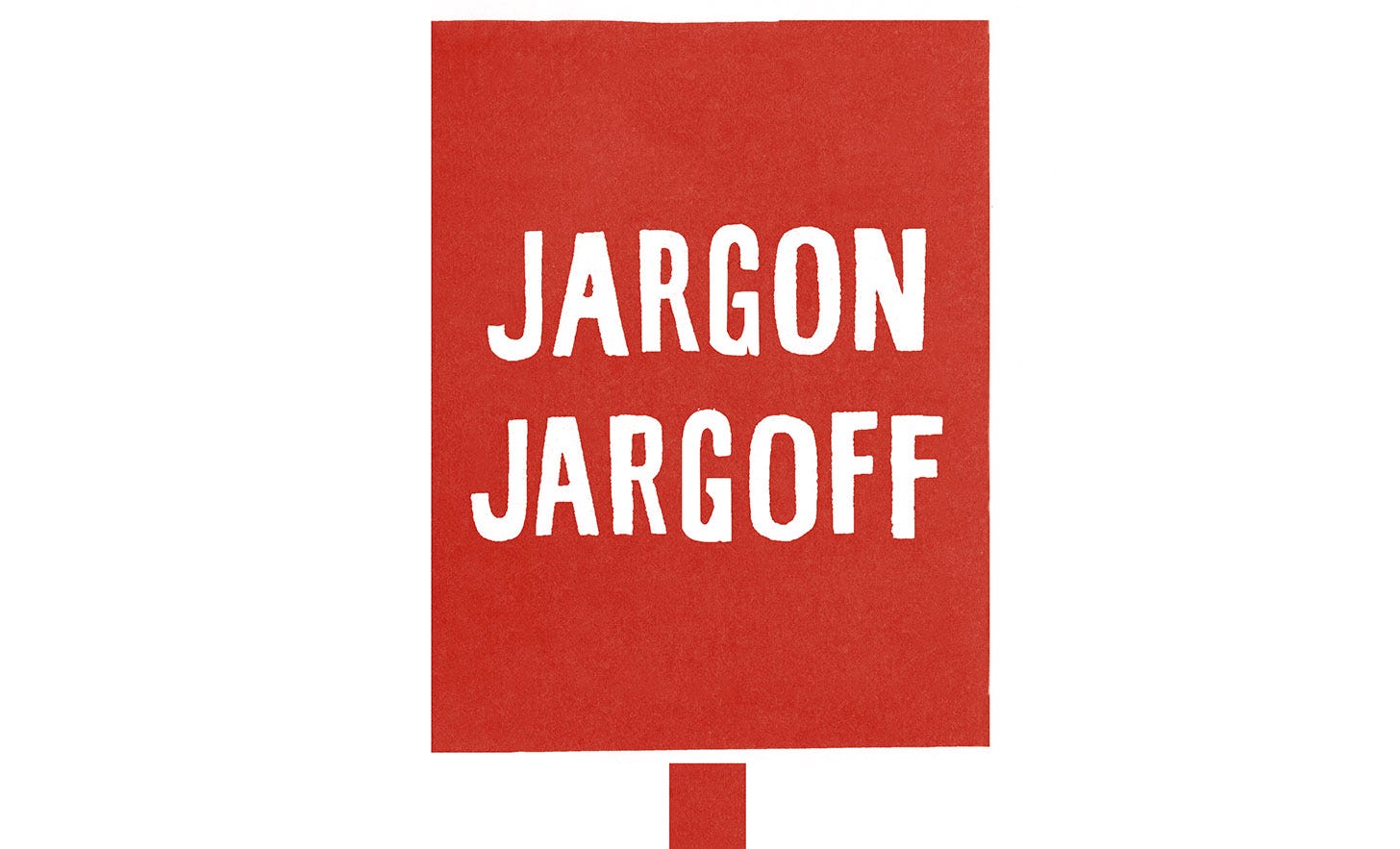
Once you look into the etymology of this stuff, you can see where it comes from. The weird artificial lust for incorporation. The moment work started pretending it was a sports team: knocking it out of the park, on the front foot all for the ‘quick wins’. Prior to that there’s the military inheritance—front lines, targets, deployment. These phrases, in particular, have long histories of violence and control that we now casually slap into emails while queuing round the block for a flat-white served in an egg cup.
Then the gilet-adorned technical fibre tech-bros got hold of it, poured in some meta-language, and suddenly everyone’s leveraging synergies while aligning stakeholders. It’s cold. It’s bloodless. And it’s weirdly aggressive while pretending to be friendly.
I’ve never understood it. I still don’t. I read emails full of abbreviations and carefully couched phrasing that somehow manages to say something rude, disappointing or often absolutely nothing at all. More recently, I’ve noticed that jargon tends to be most aggressively deployed by people who are insecure in their roles. It’s a way of signalling belonging without ever questioning what the club actually does—or whether it’s worth being in at all.
The more I straddle editorial and commercial worlds, the colder this makes me feel. Language reduced to to nothing more than a burp. Everything interchangeable. Nothing alive.
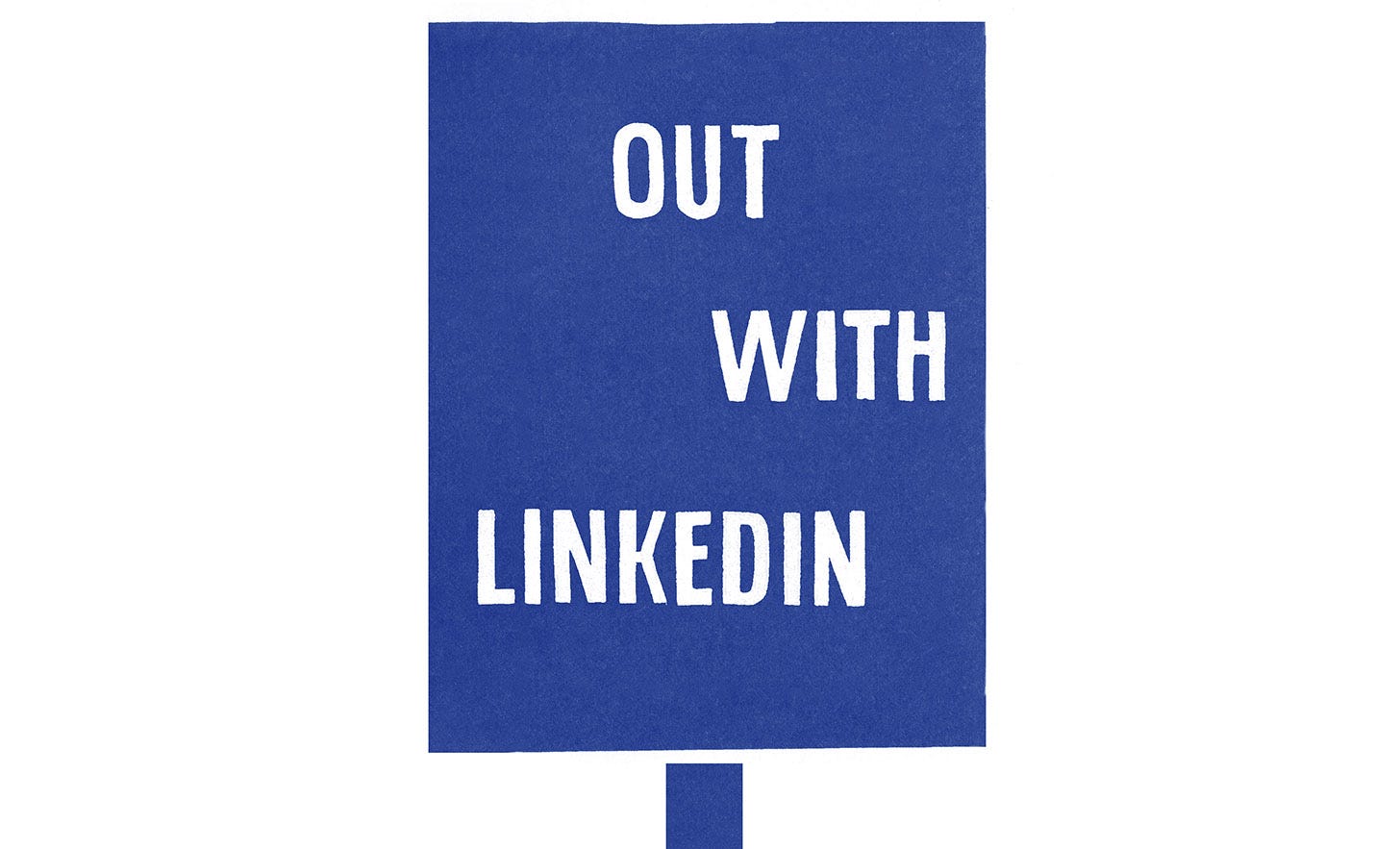
Which brings me neatly to LinkedIn — a platform I have always struggled with.
I understand its function. As a business tool, fine. Keep your CV up to date. Signal availability. Whatever. But I’ve never found a job through LinkedIn. What I have found is a uniquely cursed collision between social media and corporate ideology.
LinkedIn takes the structure of sharing life updates—births, grief, joy, relationships — and hammers business acronyms straight through the middle of them. Everything becomes a lesson. A takeaway. A “mindset shift”.
“I pissed myself in public, and here are six things it taught me about leadership.”
It’s embarrassing. Imagine saying that out loud to someone in a pub. Or to an actual human being with a face. The rise of these pseudo-aphorisms dressed up as wellness, self-help, or humblebrag enlightenment—is endlessly frustrating. It’s not insightful. It’s content farming for engagement dopamine.
And when you pull back and look at this language—how exclusionary it is—it actively undermines all the things industries claim to care about: diversity, inclusion, broadening access. We say we want different voices, but insist everyone speaks the same dead dialect to be taken seriously.
To be “part of the club,” you have to adopt the language. And nobody really questions it. I’m not convinced anyone even knows what they’re saying half the time.
So I don’t do it.
I opt out, and hope, maybe naively, that we wake up from this one day.
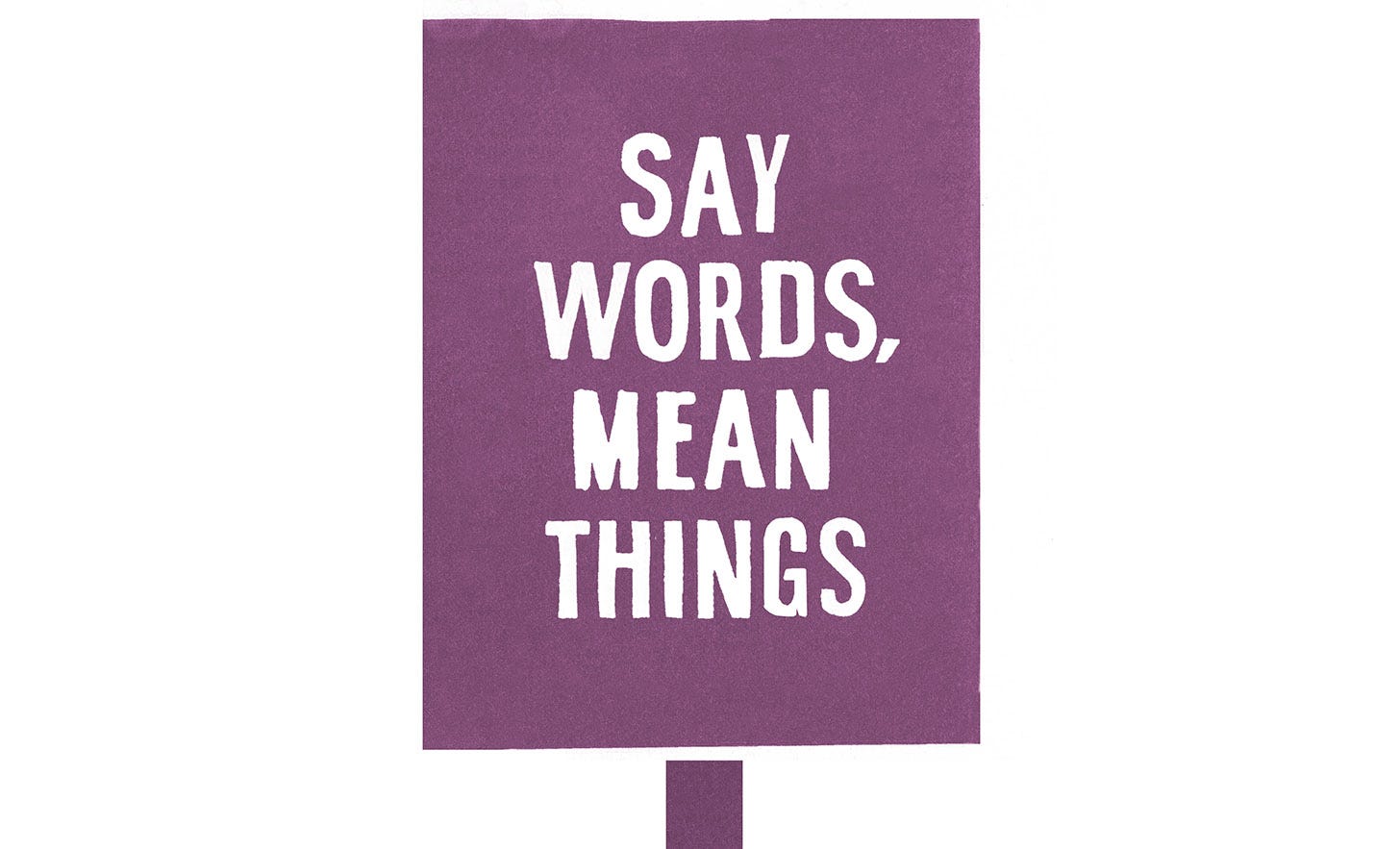
Of course, all language evolves. It’s alive; it should. I’d be lying if I pretended social media hadn’t produced its own nonsense vocabulary. Every generation does this. But for someone who has struggled with words for most of their life [dyslexic, diagnosed late] language became something obsessive. Something precious. Words mattered because they were hard-won—and they terrified me as much as they consumed me.
And they matter now, especially now, in a world that feels fractured and brittle, and inches away from being totally flattened. We should be trying to connect people again, to celebrate individuality—not sort people into linguistic clones.
Not to be completely unhinged about this but there are uncomfortable parallels here with cult language. The way communities form around shared phrases, where repetition replaces meaning. I once read about the “babble effect”—the idea that people who talk more in rooms are often perceived as leaders, not because they’re saying anything worthwhile, but because they’re saying a lot.
Quantity masquerading as quality. That’s the trick. And the parallels between cult behaviour, LinkedIn culture, workplace clichés, and jargon are closer than we’d like to admit.
So yes—I think we need to move away from this now.
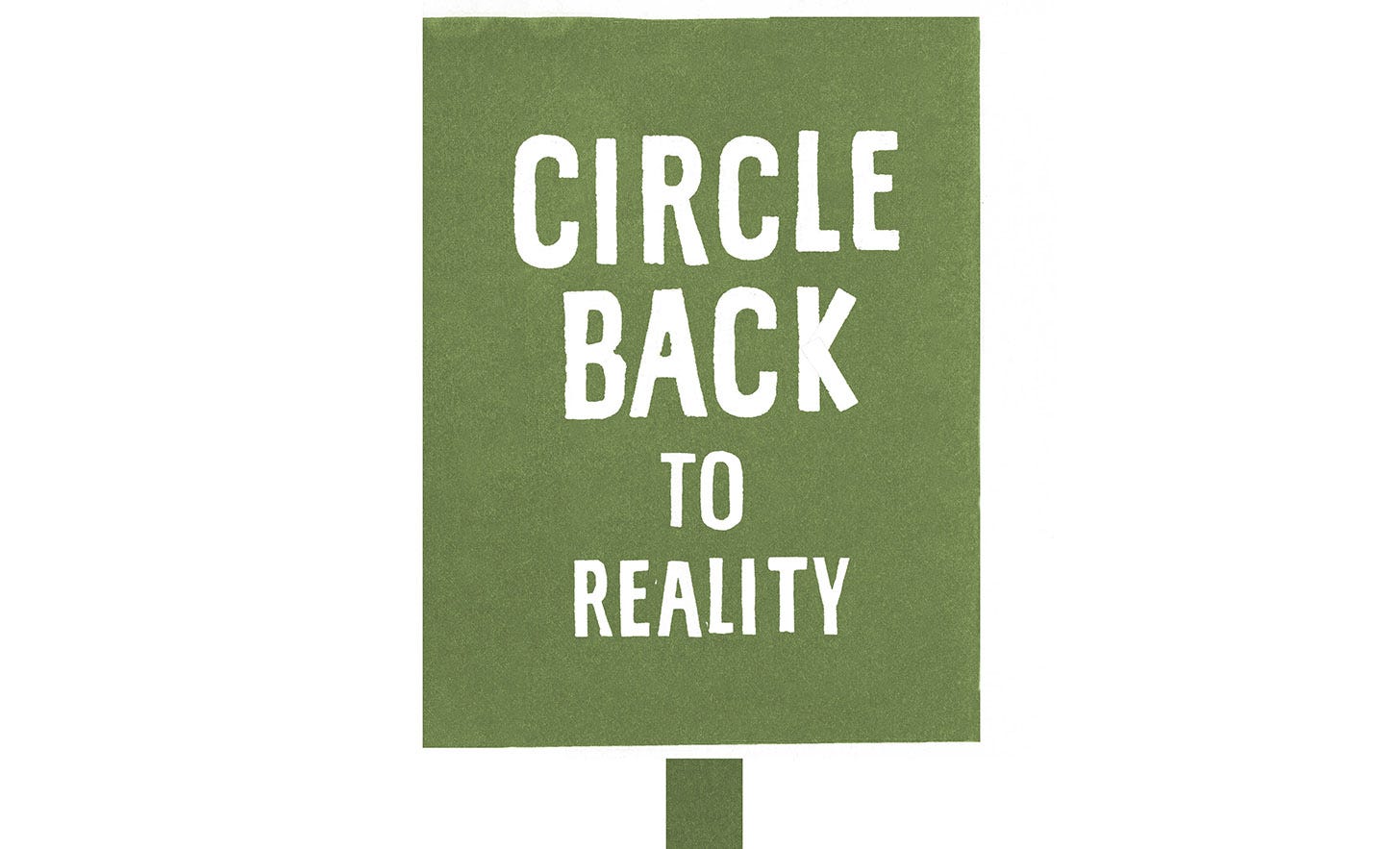
Let’s not “circle back”. Let’s stop.
⊹₊ ⋆
Sin-ergy!
Great read at EOP after I WFH today. 🔥